
 Главный сайт

Crawler Excavators in Scrap Metal Recycling
Scrap metal recycling involves more than simply collecting and transporting discarded metal. Recycling yards need efficient equipment to handle, sort, cut, stack, and load different types of scrap safely and continuously. In these demanding working environments, crawler excavators can provide a versatile solution by combining strong lifting capacity, stable operation, and compatibility with attachments such as grapples, lifting magnets, and hydraulic shears.
This article explains how crawler excavators are used in scrap metal recycling, the main applications and attachment options, and the key factors to consider when choosing the right machine for a recycling yard.
1. Quick Answer
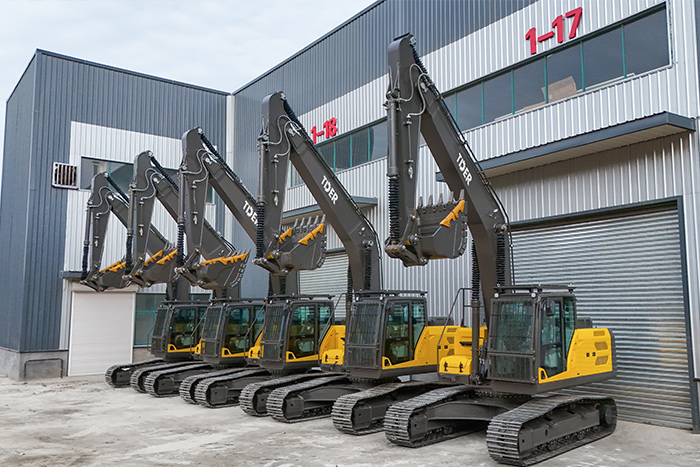
Crawler excavators are used in scrap metal recycling for handling, sorting, cutting, stacking, and loading scrap. Their stable crawler undercarriage and powerful hydraulic system make them suitable for demanding recycling yards.
For scrap recycling applications, TDER provides complete crawler excavator solutions, helping customers select the right machine and attachment based on the type and weight of scrap, working conditions, lifting requirements, and hydraulic specifications. Depending on the application, TDER crawler excavators can be equipped with hydraulic grapples, lifting magnets, hydraulic shears, and other attachments to support different recycling operations.
2. Key Takeaways
- Crawler excavators can handle, sort, cut, stack, and load different types of scrap metal.
- The right attachment depends on the material, task, and working conditions.
- Machine size, lifting capacity, hydraulic performance, and working radius are key selection factors.
- A properly configured excavator can support multiple operations with one machine.
TDER provides complete equipment and attachment solutions tailored to different scrap recycling applications.
3. Why Crawler Excavators Are Used in Scrap Metal Recycling
Scrap metal recycling yards are demanding work environments. Operators often need to move heavy, irregular, and mixed metal materials across uneven surfaces while maintaining a steady workflow. A crawler excavator can provide the stability, hydraulic power, and versatility needed for these tasks.
Stable Operation in Demanding Yards
The crawler undercarriage provides a wide and stable footprint, which is useful when working on uneven ground or around large piles of scrap. This stability also helps the machine maintain control when handling heavy materials with different attachments.
Strong Hydraulic Performance
Scrap recycling involves more than moving materials. Depending on the operation, the machine may need to grab, lift, cut, or process metal. A powerful hydraulic system allows the excavator to work with attachments designed for specific recycling tasks.
One Machine, Multiple Applications
Another advantage is versatility. The same excavator can be configured with different attachments for material handling, sorting, cutting, and loading. This allows recycling businesses to adapt the machine to changing workloads without relying on separate machines for every task.
Suitable for Heavy-Duty Material Handling
For recycling yards handling large quantities of scrap, machine stability, lifting performance, and attachment compatibility are important considerations. Choosing the right configuration allows the excavator to work efficiently while supporting the daily demands of a busy recycling operation.
4. Main Applications in Scrap Metal Recycling
A crawler excavator can play an important role throughout the scrap recycling process. From receiving and moving incoming materials to sorting, dismantling, size reduction, and final loading, it can support several operations within the same recycling yard. This versatility is particularly useful for businesses that handle different types and sizes of scrap.
Scrap Handling
The first step in many recycling operations is moving scrap from one location to another. Excavators can handle steel plates, pipes, machinery components, structural steel, and mixed metal waste, transferring materials between storage areas and processing equipment.
Stable operation and controlled movement are especially important when working with heavy or irregularly shaped materials.
Scrap Sorting
Sorting helps recycling yards separate materials according to type, size, or processing requirements. An excavator can move individual pieces from mixed piles and organize them into designated storage areas.
Effective sorting can reduce unnecessary material movement and prepare scrap for further processing, resale, shredding, or baling.
Vehicle Dismantling
End-of-life vehicles are an important source of recyclable metal. Excavators can assist with moving vehicle bodies, handling dismantled components, and separating large metal parts during the dismantling process.
The machine's reach and hydraulic power allow operators to work around bulky vehicle bodies while maintaining a controlled workflow.
Scrap Cutting
Large or oversized metal components may need to be reduced in size before transportation or further processing. Excavators equipped for cutting operations can process steel beams, pipes, structural components, and vehicle parts into more manageable pieces.
This helps improve material handling and makes subsequent processing and loading more efficient.
Loading & Stacking
Once scrap has been sorted or processed, it needs to be organized for storage or loaded onto trucks. Excavators can build and manage scrap piles, move processed materials, and load vehicles for transportation.
A well-organized stacking and loading process can improve yard utilization, reduce unnecessary machine travel, and support a more efficient recycling workflow.
Overall, the main value of an excavator in scrap metal recycling is its ability to support multiple stages of material handling with one versatile machine. The specific attachment and machine configuration can then be selected according to the material and task, which is discussed in the next section.
5. Choosing the Right Attachment
The right attachment can significantly expand the capabilities of an excavator in a scrap recycling yard. The choice should be based on the type, size, weight, and condition of the material, as well as the specific task being performed.
The attachments below are some of the most commonly used options in scrap metal recycling, rather than a complete list. Different recycling operations may require different configurations depending on their materials, processes, and working conditions. For a track excavator, common choices include grapples, lifting magnets, and hydraulic shears, while other specialized attachments can also be configured for specific applications.
Hydraulic Grapple
A hydraulic grapple is a practical choice for general scrap handling and sorting. Its gripping action allows operators to pick up irregularly shaped materials such as steel plates, pipes, machinery parts, and mixed scrap.
It is particularly useful when materials need to be moved, separated, stacked, or loaded repeatedly throughout the day.
Lifting Magnet
A lifting magnet is designed primarily for handling ferrous metals. It can quickly pick up loose steel and iron scrap, making it useful for loading, stockpile management, and moving large quantities of magnetic material.
For operations focused mainly on ferrous scrap, a lifting magnet can provide fast and convenient material handling.
Hydraulic Shear
A hydraulic shear is used when scrap needs to be cut rather than simply moved. It can process steel beams, pipes, structural components, vehicle bodies, and other oversized metal parts.
Cutting large materials into smaller sections can make subsequent handling, transportation, and processing easier.
Orange-Peel Grapple
An orange-peel grapple is designed for loose and bulky scrap, particularly materials that are difficult to handle with a conventional grapple. Its multi-tine design can pick up large volumes of irregularly shaped metal from scrap piles.
It can be useful in high-volume recycling yards where fast bulk material handling is a priority.
Attachment Selection at a Glance
|
Attachment |
Best suited for |
Main purpose |
|
Hydraulic grapple |
Mixed and irregular scrap |
Handling, sorting, stacking |
|
Lifting magnet |
Ferrous scrap |
Picking and loading |
|
Hydraulic shear |
Oversized steel and vehicle parts |
Cutting and size reduction |
|
Orange-peel grapple |
Loose, bulky scrap |
High-volume bulk handling |
These four attachments represent only some of the common solutions used in scrap metal recycling. Depending on the application, other attachments can also be used for different material-handling, processing, and loading requirements.
TDER provides a wider range of attachment options and complete equipment solutions, helping customers match the excavator and attachment to their specific materials, working conditions, lifting requirements, and recycling processes. This approach allows the equipment configuration to be adapted to the actual operation rather than being limited to a fixed list of attachments.
6. How to Choose the Right Crawler Excavator
Choosing the right excavator for scrap metal recycling requires more than looking at engine power or operating weight alone. The machine should be matched to the material being handled, the working environment, the required attachment, and the expected workload. The following factors are important when selecting a machine for recycling applications.
Operating Weight
Operating weight affects machine stability, lifting performance, and overall suitability for heavy-duty material handling. For recycling yards handling large or dense scrap, a heavier machine can provide a more stable working platform.
A large crawler excavator may be suitable for high-volume operations where heavy materials and demanding working conditions require greater machine stability.
Lifting Capacity
Lifting capacity is especially important when handling heavy steel components, machinery parts, vehicle bodies, or large bundles of scrap. The excavator should have sufficient lifting performance for the intended load and working radius.
Operators should also consider how lifting capacity changes as the load moves farther from the machine.
Hydraulic Flow
Hydraulic flow and pressure determine whether the excavator can operate different hydraulic attachments effectively. Equipment such as hydraulic grapples and shears may have specific flow and pressure requirements.
A machine with suitable hydraulic performance can provide more consistent attachment operation and help reduce unnecessary limitations during demanding recycling tasks.
Working Radius
The working radius determines how far the excavator can reach into scrap piles, trucks, processing areas, and storage zones. A suitable working range can reduce machine repositioning and improve workflow efficiency.
For recycling yards with large stockpiles or loading areas, sufficient reach can be particularly valuable.
Attachment Compatibility
The excavator should be compatible with the selected attachment in terms of hydraulic specifications, mounting configuration, weight, and machine capacity. This is especially important when switching between different attachments for handling, sorting, cutting, and loading.
A 23-Ton Configuration for Heavy-Duty Recycling Applications
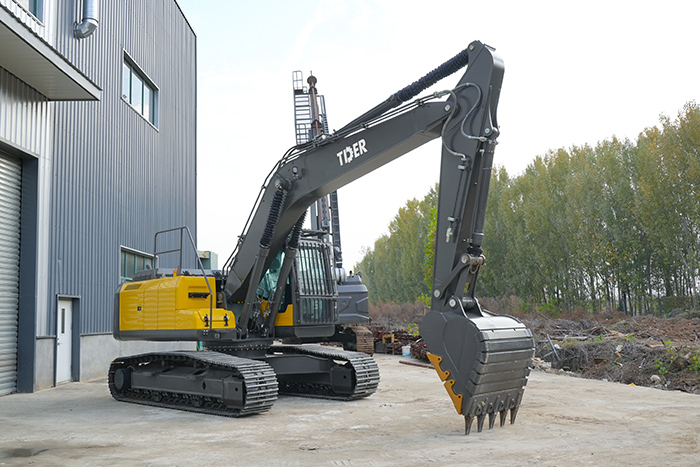
Once these factors are considered together, a 23-ton-class excavator can be a practical configuration to evaluate for recycling operations that handle substantial quantities of heavy scrap. It provides a balance between machine stability, lifting capability, working range, and the ability to support larger hydraulic attachments.
TDER TCE230 is one example of this configuration. It has an operating weight of 23,000 kg, a 133 kW Cummins 6BTAA5.9 engine, and a 1.1 m³ bucket capacity. Its hydraulic system provides 34 MPa working pressure, using a PNM hydraulic pump and Parker hydraulic valve.
The machine also offers a maximum digging radius of 9,850 mm and comes with one standard independent hydraulic circuit, providing a foundation for configuring suitable hydraulic attachments. An Isuzu Euro 5 engine is also available as an alternative option.
These specifications make the TCE230 a configuration worth considering for demanding material-handling applications. However, machine selection should focus on the complete working system rather than operating weight alone. TDER can help customers match the excavator, hydraulic system, and attachment according to their specific materials, workload, and recycling conditions.
7. Comparison: Crawler Excavator vs. Other Scrap Handling Equipment
Crawler excavators are not the only machines used in scrap metal recycling. Depending on the yard layout, ground conditions, mobility requirements, and workload, recycling businesses may also consider wheeled excavators or dedicated material handlers.
|
Equipment |
Stability |
Mobility |
Typical Scrap Recycling Applications |
|
Crawler Excavator |
High |
Moderate |
Heavy scrap handling, sorting, cutting, stacking |
|
Wheeled Excavator |
Moderate |
High |
Material handling where frequent movement is required |
|
Dedicated Material Handler |
High |
High |
High-volume scrap handling and loading |
Which Equipment Fits Different Working Conditions?
- A crawler excavator can be suitable for yards where stability and heavy-duty performance are important, particularly when working on uneven ground or handling large and irregular materials.
- A wheeled excavator offers greater mobility and can be more convenient when the machine needs to move frequently across paved or prepared surfaces.
- A dedicated material handler is designed specifically for high-volume material handling and may be preferred for recycling operations where continuous loading and sorting are the primary tasks.
The appropriate choice depends on the site's ground conditions, material type, operating cycle, mobility requirements, and attachment configuration. Rather than selecting equipment based on machine type alone, recycling businesses should evaluate which configuration best matches their actual workflow.
8. TDER Crawler Excavator for Scrap Recycling in Turkey
Turkey is one of the important markets for scrap metal recycling, supported by a well-established steelmaking industry and strong demand for ferrous scrap. This creates ongoing requirements for equipment used to handle, sort, process, and load scrap materials.
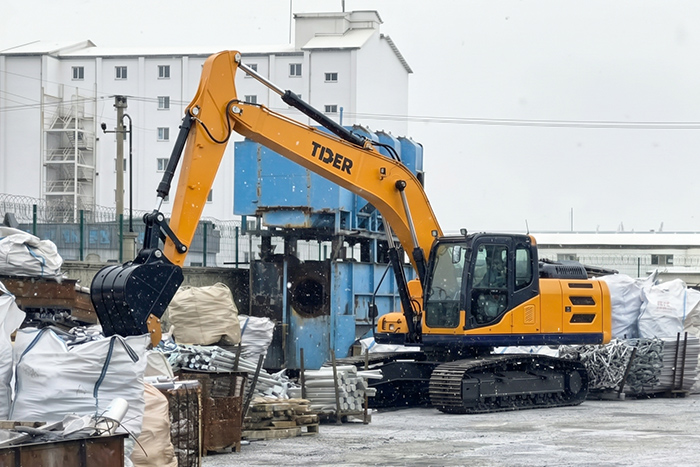
In January 2026, a TDER customer in Turkey purchased a 21-ton crawler excavator for scrap metal recycling. The machine was selected for its suitability for heavy-duty material handling in a demanding recycling environment.
A 21-ton-class excavator provides a practical combination of stability, working range, and lifting capability for handling heavy and irregular scrap. Depending on the configuration, it can support operations such as moving scrap, managing stockpiles, sorting materials, and loading processed metal.
This application also highlights the importance of matching machine configuration to the local industry and actual working conditions. For similar recycling applications, TDER can provide complete equipment and attachment solutions based on material type, workload, hydraulic requirements, and operating environment.
9. Productivity & Maintenance Tips
Consistent productivity in scrap recycling depends not only on machine capacity but also on daily operation and maintenance. A few practical measures can help keep the excavator working reliably.
- Match the attachment to the material: Use the appropriate attachment for the size, weight, and type of scrap being handled.
- Avoid unnecessary movement: Organize scrap piles and loading areas to reduce excessive machine travel and repositioning.
- Monitor hydraulic components: Regularly check hydraulic hoses, connections, filters, and fluid levels, especially when using demanding attachments.
- Inspect the undercarriage: Scrap yards can contain sharp or uneven materials, so regular inspection of tracks and undercarriage components is important.
- Follow scheduled maintenance: Routine servicing helps identify wear early and supports consistent machine availability.
Good maintenance practices, combined with an efficient yard layout and suitable attachment configuration, can help maintain stable performance over long operating cycles.
10. Productivity & Maintenance Tips
Consistent productivity in scrap recycling depends not only on machine capacity but also on daily operation and maintenance. A few practical measures can help keep the excavator working reliably.
- Match the attachment to the material: Use the appropriate attachment for the size, weight, and type of scrap being handled.
- Avoid unnecessary movement: Organize scrap piles and loading areas to reduce excessive machine travel and repositioning.
- Monitor hydraulic components: Regularly check hydraulic hoses, connections, filters, and fluid levels, especially when using demanding attachments.
- Inspect the undercarriage: Scrap yards can contain sharp or uneven materials, so regular inspection of tracks and undercarriage components is important.
- Follow scheduled maintenance: Routine servicing helps identify wear early and supports consistent machine availability.
Good maintenance practices, combined with an efficient yard layout and suitable attachment configuration, can help maintain stable performance over long operating cycles.
11. Conclusion
Crawler excavators provide a versatile solution for scrap metal recycling, supporting handling, sorting, cutting, stacking, and loading operations with suitable attachments. The right machine should be selected according to the material, workload, working conditions, and attachment requirements.
With experience in different recycling applications, TDER provides complete crawler excavator and attachment solutions, helping customers configure equipment to match their specific operational needs.
12. FAQs
What type of excavator is suitable for scrap metal recycling?
The right excavator depends on the type and weight of scrap, daily workload, working conditions, and required attachments. Medium- to large-size crawler excavators are commonly considered for heavy-duty scrap handling.
What attachments can be used for scrap metal recycling?
Common options include hydraulic grapples, lifting magnets, hydraulic shears, and orange-peel grapples. Other attachments can also be configured for specific recycling applications.
Can one crawler excavator handle different types of scrap?
Yes. With interchangeable attachments, one excavator can support different tasks such as handling, sorting, cutting, stacking, and loading. The machine and attachments should be properly matched.
How do I choose the right excavator size?
Consider the weight and dimensions of the scrap, required lifting capacity, working radius, yard conditions, and attachment weight. The excavator should have sufficient capacity for the complete working system.
What hydraulic specifications should I check before buying?
Check the attachment's required hydraulic flow, working pressure, connection type, and circuit configuration. These specifications should be compatible with the excavator before the attachment is selected.
Can TDER provide the excavator and attachments as a complete solution?
Yes. TDER can help customers select the crawler excavator and compatible attachments according to their scrap materials, workload, working environment, and specific recycling requirements.